
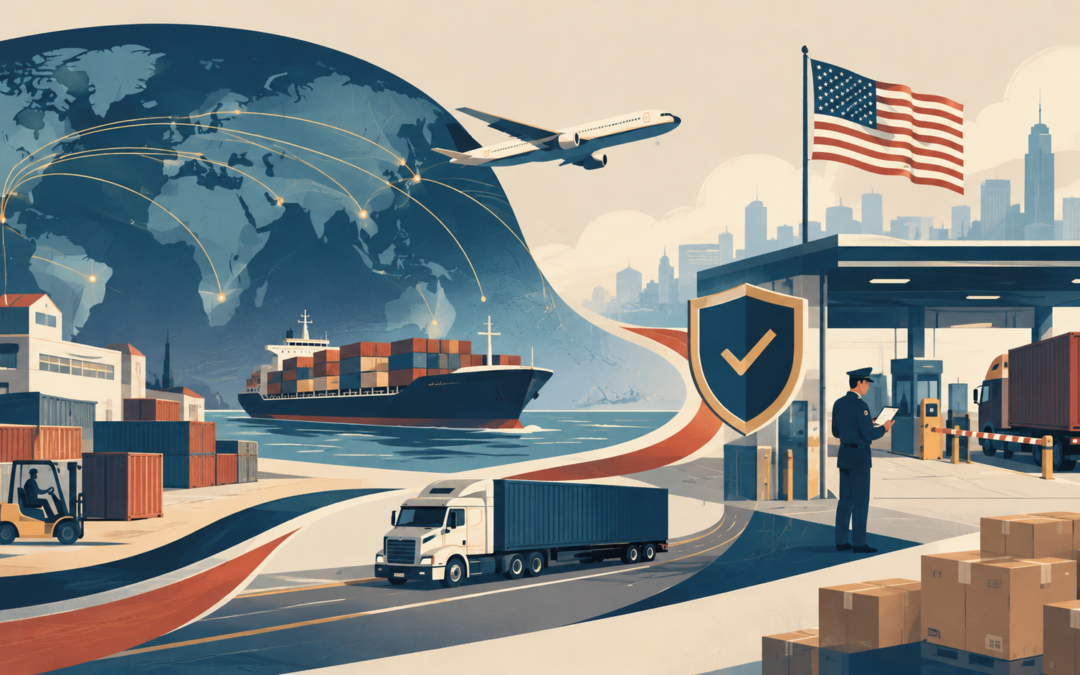
Global trade has shifted from a matter of cost optimization to one of strategic decisions for survival. By late 2025, U.S. tariffs reached their highest levels since World War II, fundamentally transforming how multinational corporations structure their supply networks.
This shift has forced business leaders to transition from traditional, cost-centric sourcing models to advanced risk-minimization frameworks. Data from 2026 Thomson Reuters Global Trade Report indicates that 72% of trade professionals identify tariff volatility as the most disruptive regulatory change for their businesses—a sharp increase from 41% the previous year. Consequently, supply chain management has been elevated to a top-tier enterprise risk priority, cited by 68% of commercial executives as a board-level concern, nearly doubling the 35% recorded the prior year.
Rethinking your sourcing strategy for the US market
The era of relying on a single low-cost sourcing destination is over. Tariff volatility has accelerated a realignment of global trade routes. Sourcing patterns are shifting away from the traditional U.S.–China corridor, whose bilateral trade decreased by approximately 30% in 2025, reallocating over $165 billion in nominal goods trade. U.S. imports from China fell by nearly 30% in 2025, and Chinese goods now account for only about 9% of total U.S. imports—the lowest level since 2001.
In response, 65% of importers are actively shifting their geographic sourcing patterns toward Southeast Asia, India, Mexico, Eastern Europe, and Turkey. A recent survey found that 79% of companies moved at least part of their sourcing volume out of China in 2025, with many expanding their supplier networks in Southeast Asia and India. To mitigate risk, 57% of companies are renegotiating supplier contracts, and 51% are moving or reshoring production directly to the United States.
This geopolitical restructuring has given rise to parallel regional supply chains. To comply with divergent international trade regimes, many companies now duplicate their suppliers, manufacturing tools, and inventories across different geopolitical blocs. These decisions are accompanied by a strategy of delaying final assembly until reaching destination markets to avoid high tariffs on intermediate components.
However, this geographic diversification introduces coordination costs and structural challenges. Global value chains are highly exposed to external disruptions; major logistical disruptions lasting a month or more now occur on average every 3.7 years, forcing a complete reassessment of network designs. Importers are also hitting a wall on tariff absorption, as 73% of logistics leaders report that internal operating margins can no longer offset rising trade costs, forcing them to pass price increases along to consumers.
At Global Alliance Solutions, we know that strategic sourcing is no longer about finding the cheapest supplier, but about building a resilient and diversified network capable of withstanding geopolitical shocks, regulatory shifts, and physical disruptions. This requires a fundamental rethink of supplier relationships, inventory strategies, and logistics partnerships.
Leveraging nearshoring: Why Mexico is a strategic partner
Mexico is a pillar of North American supply chain integration. A Deloitte study found that 62% of U.S. manufacturers are actively considering or already executing the relocation of their production capacity to Mexico. This nearshoring trend is driven by clear logistical advantages: moving manufacturing to Mexico compresses transit times from a 25-to-40-day ocean voyage from Asia to a 2-to-5-day overland trip to the U.S. border.
Bilateral trade between the United States and Mexico reached $873 billion in 2025, representing 15.6% of total U.S. trade and surpassing trade with Canada ($719 billion) and China ($419 billion) combined—cementing Mexico as the primary trading partner of the United States. In 2025, Mexico also surpassed China as the largest exporter of advanced technology products to the United States, illustrating a major structural shift in high-tech manufacturing.
This economic integration relies heavily on the United States–Mexico–Canada Agreement (USMCA). In 2025, the share of Mexican exports utilizing preferential USMCA tariffs rose to nearly 80% of total trade value, up from less than 50% in previous years. This increase was driven by rising U.S. tariffs on non-USMCA goods, which incentivized strict compliance with the agreement’s rules of origin.
Mexico remains an indispensable partner for U.S. importers seeking to shorten supply chains, reduce transit times, and mitigate geopolitical risks. The key lies in navigating these complexities with a partner who understands the local environment and offers integrated solutions.
The logistics of cross-border trade: From factory to doorstep
Cross-border overland logistics is key to trade in North America, as total U.S. freight flows with Canada and Mexico reached $1.6 trillion in 2025, representing nearly a third of the country’s total international trade of $5.3 trillion. U.S.–Mexico freight grew by 3.9% to $872.8 billion in 2025, while trade with Canada contracted by 6.4% to $712.8 billion.
Trucking remains the dominant mode, moving $1.0 trillion in cross-border freight—a year-over-year expansion of 0.7%.
Laredo, Texas, is the largest U.S.–Mexico corridor and the busiest inland port in North America, handling approximately 40% of all bilateral overland trade. Between 14,000 and 18,000 commercial trucks cross Laredo’s bridge system daily. The crossing infrastructure includes the World Trade Bridge, the Colombia Solidarity Bridge, and International Bridges I and II.
Any documentation discrepancy or physical inspection can extend border delays by 1 to 3 days, adding storage and detention costs. Overland transport across the Mexican border generally averages two days from origin dispatch to completed crossing, assuming all documentation is correct. Once freight clears customs, the actual crossing by a drayage carrier typically takes 2 to 5 hours. Importers can also utilize direct rail intermodal services.
To ensure a smooth crossing, importers must prepare a complete documentation package that includes:
- Commercial invoice: Must contain precise seller and buyer details, detailed product descriptions, unit quantities, unit prices, declared values, payment terms, and the declared country of origin.
- Bill of lading: The legally binding contract of carriage between the shipper and the carrier.
- Packing list: A detailed breakdown of the container’s contents, including net and gross weights and exact dimensions.
- USMCA certificate of origin: Required to claim duty-free preferential treatment under the agreement.
- Pedimento: The official Mexican customs entry document, prepared by a licensed Mexican customs broker.
- Complemento Carta Porte: A mandatory digital transit document required by Mexico’s Tax Administration Service (SAT) for all commercial freight moving within Mexican territory.
- Documento de Operaciones para el Despacho Aduanero (DODA): The operational document presented to customs authorities to activate the automated border clearance mechanism.
- U.S. Customs Entry: The filing required by U.S. Customs and Border Protection (CBP) for entry into the United States.
- ISPM 15 / IPPC Mark: Certification proving that all solid wood packaging has been heat-treated to prevent pest transmission.
Carriers must also submit an automated electronic manifest via the Automated Commercial Environment (ACE) system at least one hour before the truck arrives at the border crossing.
Importers must also decide between through-trailer shipping and transloading. Through-trailer shipping keeps the freight sealed in a single trailer throughout the journey, swapping only the tractor and driver at the border. Transloading transfers cargo from a Mexican trailer to a U.S.-compliant trailer at a secure border facility.
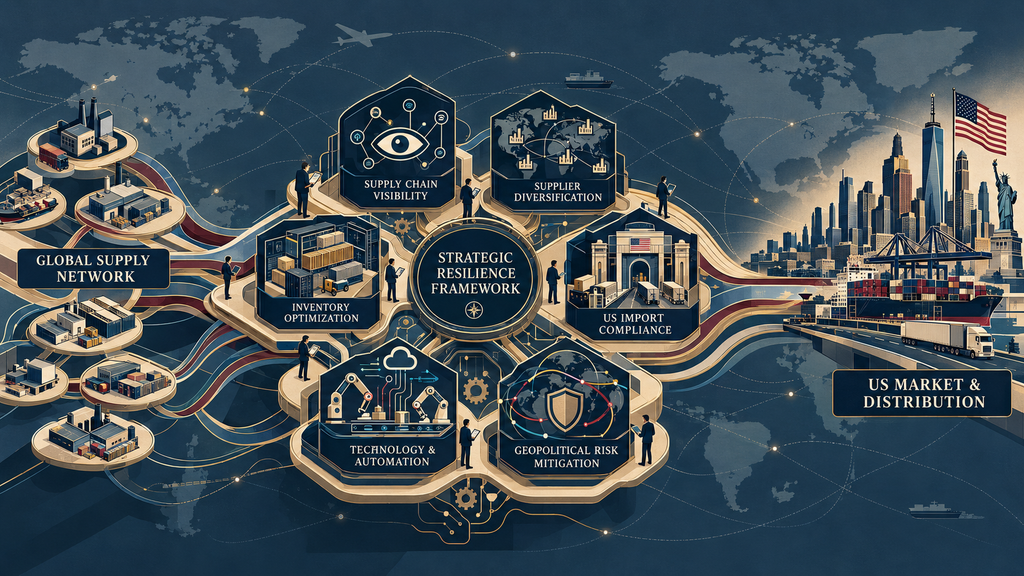
Customs compliance as a competitive advantage
Strict customs compliance accelerated on June 3, 2026, with the issuance of Executive Order 14411, “Strengthening Customs Enforcement.” The executive order instructs U.S. Customs and Border Protection (CBP) and the Department of Homeland Security to implement strict enforcement measures specifically targeting foreign importers of record, non-resident importers, and foreign-owned U.S. subsidiaries. Historically, CBP has faced challenges in auditing, investigating, or holding foreign-based entities financially accountable for customs violations.
This requirement has significantly increased demand for CTPAT-certified customs brokers. Importers relying on non-CTPAT brokers face higher audit rates, cargo inspections, and potential clearance delays, making CTPAT validation a vital credential for ensuring predictable transit times. CTPAT-validated importers benefit from significant reductions in cargo inspection rates, preferential examination privileges, and dedicated support from assigned supply chain security specialists.
Simultaneously, the enforcement of forced labor import bans has reached unprecedented levels of severity. On June 9, 2026, CBP published its updated Forced Labor Operational Guidance for Importers, replacing the previous June 2022 UFLPA operational guidance with a consolidated framework.
This updated guidance covers three primary forced labor authorities under a single compliance standard: Section 307 of the Tariff Act of 1930 (19 U.S.C. § 1307), the Uyghur Forced Labor Prevention Act (UFLPA), and Section 321A of the Countering America’s Adversaries Through Sanctions Act (CAATSA).
To enforce these rules, the Department of Justice established a specialized global trade enforcement section within its Fraud Section on July 14, 2026. This section is tasked with investigating and criminally prosecuting corporate officers and entities involved in import fraud, duty evasion, or the willful sourcing of goods produced through forced labor.
Under these guidelines, the legal threshold for compliance is exceptionally high, centered on the “in whole or in part” standard. This means that if even a minor component or raw material is linked to forced labor, the entire finished imported product is deemed inadmissible. Importers must demonstrate full supply chain mapping down to the raw material level, supported by traceable, transaction-specific, product-linked evidence. Generic supplier compliance certificates are considered legally insufficient.
Furthermore, if a shipment is detained, the importer is responsible for all demurrage and storage costs while CBP reviews the admissibility package. CBP is also authorized to require single-transaction customs bonds valued at up to three times the total declared value of the detained cargo, tying up vital working capital.
In this rigorous climate, CTPAT-validated trade compliance partners gain a critical operational advantage, receiving priority admissibility reviews, redelivery flexibility, and advance warning of new Withhold Release Orders (WROs).
To manage these compliance risks, importers must adapt to new automated systems. CBP has integrated UFLPA region alert validations into the ACE system, which requires a valid Chinese postal code for customs declarations and triggers automated warning messages for entries matching Xinjiang postal codes.
Additionally, the government has expanded priority enforcement sectors under the UFLPA. In 2025, five priority sectors were added: caustic soda, jujubes (red dates), copper, lithium, and steel, bringing the total number of priority enforcement sectors to thirteen. This expanded list demands deeper compliance audits across a wide array of industrial supply chains, particularly those involving advanced batteries, automotive parts, plastics, and non-ferrous metals.
Customs compliance is no longer a box to check—it is a strategic function that can differentiate a company from its competitors. Importers that invest in robust compliance programs, CTPAT validation, and supply chain mapping gain a significant edge in terms of speed, cost, and reliability.
The value of a holistic partner: Combining brokerage, warehousing, and consulting
Managing international supply chains through fragmented point solutions creates operational friction. Importers often suffer a self-imposed “coordination tax”—the administrative hours and lost capital when disconnected ERP (Enterprise Resource Planning), WMS (Warehouse Management Systems), and TMS (Transportation Management Systems) force logistics staff to act as a manual integration layer. This lack of integration leads to severe data lag, where different departments make decisions based on outdated timelines, resulting in costly warehouse dwell times, shipping errors, and customs clearance delays.
An integrated logistics partner resolves these issues by consolidating customs brokerage, international drayage, warehousing, and domestic fulfillment under a single operational and digital framework. This unified approach provides:
- Financial efficiencies and working capital optimization.
- Proactive customs and border integration.
- Asset-Based flexibility and network access.
- Accelerated distribution models.
For sophisticated importers, choosing a logistics partner is a strategic decision that goes far beyond transactional brokerage. A comprehensive partner brings deep expertise in customs compliance, warehousing, and cross-border logistics, allowing importers to focus on their core business while confidently navigating the complexities of international trade.
Future-proofing your imports against disruptions
The global import environment of 2026 is shaped by structural cost inflation, volatile trade policies, and escalating physical disruptions. Chief Supply Chain Officers (CSCOs) are navigating a new normal of extreme climate volatility. Billion-dollar weather disasters now occur every three weeks on average—compared to twelve-week intervals in the 1980s—causing severe droughts that restrict traffic through critical transit lanes like the Panama Canal, and flooding that triggers sudden port closures and infrastructure collapses.
Simultaneously, systemic ocean freight imbalances persist; global demand is projected to grow by 3% in 2026, while vessel capacity is expanding by 3.6%, creating structural overcapacity that is further complicated by the potential reactivation of the Suez Canal and rising emissions compliance costs under the expanded EU Emissions Trading System (ETS). High interest rates also make building large safety stock buffers financially unsustainable, forcing organizations to develop more agile, data-driven operating models.
To future-proof operations against these disruptions, leading importers are integrating advanced technology stacks centered on the Internet of Things (IoT) and Artificial Intelligence (AI). The global IoT sensor market is projected to grow from $31.1 billion in 2026 to $136.1 billion by 2031, driven by the expansion of active connected IoT endpoints to 21.9 billion. Low-cost, disposable, 5G-enabled IoT sensors are increasingly deployed at the pallet and item level, transmitting real-time tracking data on temperature, humidity, shock, tilt, and light exposure.
These real-time telemetry streams are ingested by AI engines and combined with external data, such as maritime congestion indices, weather forecasts, and geopolitical risk signals. This allows systems to transition from reactive tracking to predictive visibility. For example, if a temperature deviation is detected in transit, the AI engine can calculate the risk of cargo spoilage, evaluate alternative routes, and automatically coordinate cross-docking or carrier changes before product loss occurs.
By adopting these advanced platforms and implementing continuous, scenario-based planning, United States importers can build resilient supply chains capable of navigating a highly volatile trade landscape.
Conclusion
Importing into the United States in 2026 and beyond requires a strategic, integrated approach that goes far beyond transactional brokerage. The convergence of tariff volatility, geopolitical fragmentation, supply chain disruptions, and stringent enforcement of forced labor prohibitions has transformed importation into a complex, high-stakes endeavor.
Success in this environment demands a fundamental rethinking of sourcing strategies, a deep understanding of the Mexico-US trade corridor, mastery of cross-border logistics, and a commitment to customs compliance as a competitive advantage. Most importantly, it requires a holistic partner who can provide integrated brokerage, warehousing, and consulting services—a partner like Global Alliance Solutions.
By leveraging binational expertise in the Mexico-US trade corridor, Global Alliance Solutions is uniquely positioned to help sophisticated importers navigate these complexities. Whether it’s optimizing sourcing strategies, managing cross-border logistics, ensuring customs compliance, or future-proofing supply chains against disruptions, Global Alliance Solutions offers the strategic insights and operational excellence that larger clients demand.